{{text}}
Share
La Title tag Is one of the most influential signals of Seo On-page. Elle Define the title Visible inTab Ofthe Browser And Serves as the Main Reference Point for the Search engine When He Should Understand the Subject of a Web page. La Meta description, on the other hand, is not a direct ranking factor, but it plays a decisive role in the click rate and the perception of relevance in the Serp.
Chez Synqro, Webflow agency performance-oriented, we optimize sites with a simple method: structure, speed, content, and specific semantic signals. On a site, the title tag and the meta description are frequent points of friction: titles that are duplicated, too long, not aligned with the content, or inconsistent with the content, or inconsistent with the H1. This guide gives you a method for writing andOptimization clear, compatible with SEO requirements current.
Title tag: definition and role in SEO
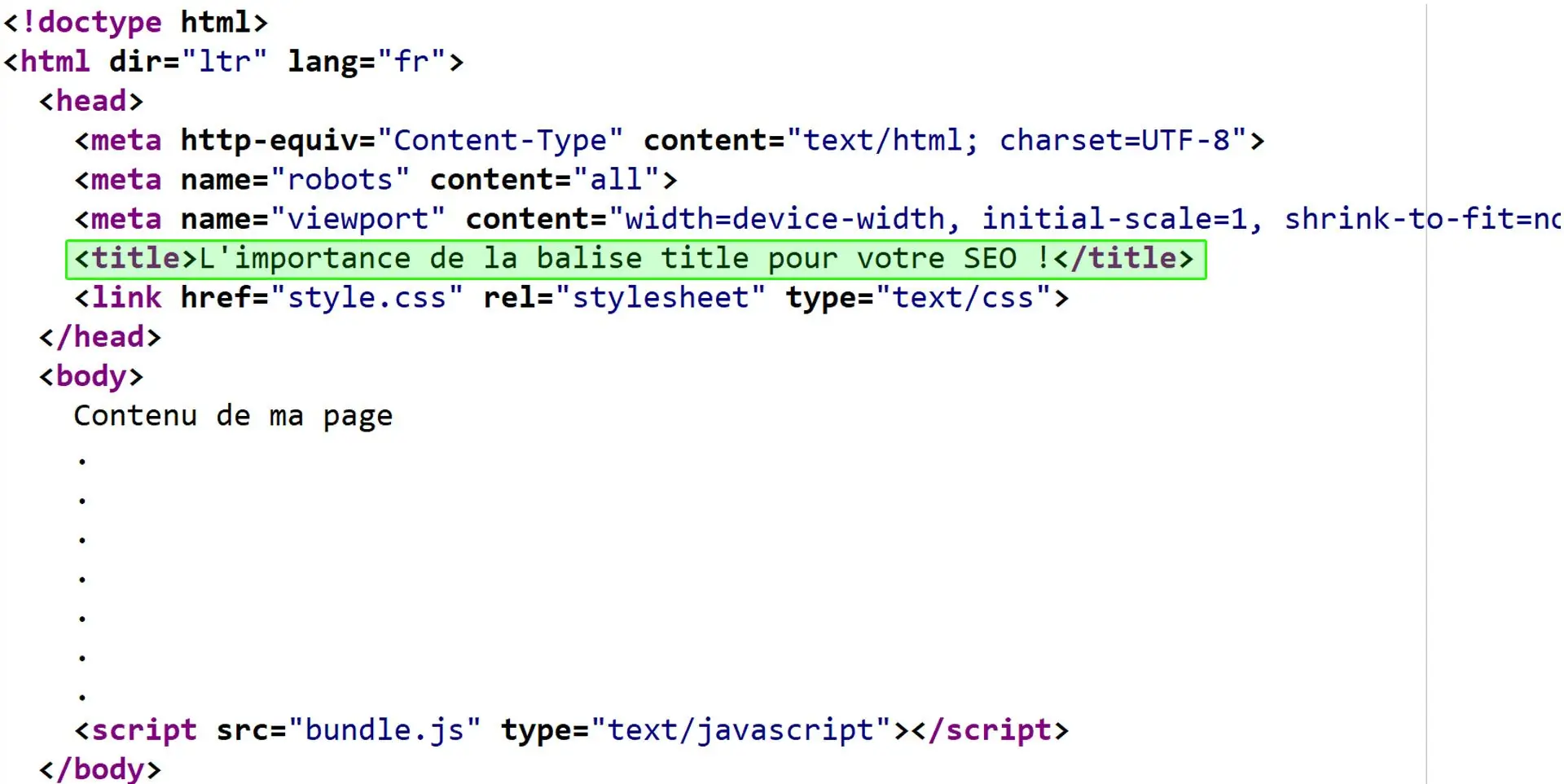
La Title tag Is a Html tag Placed in the Html code Of the header of a page. It Tells the Browser and Search Engines Tea Title of the page. In practice, it is used to Show A title in the browser tab, and it is often referred to as Title in the Serp. This is why the title tag is a central element of SEO of the page : it influences the understanding of the subject and the probability of clicking.
It is necessary to distinguish The titles visible to the user and the technical logic. The title is not just a “name”: it summarizes the promise of the page. We have One page, the title must correspond to the intent of Search of the user, without over-optimizing. Even the Other Search Engines Rely on this signal to interpret the context.
What this tag brings:
- A clear signal from Seo On the subject of the page
- A reading guide in Search results
- To raise for Show An attractive title in Serp
- A basis for consistency between page, content and intent
Title and meta description tags: differences and complementarity
Les Title and meta description tags Do not have the same role. The title is a signal of understanding and potential ranking, while the Meta description Mainly acts on the ability to convince the user to click. In a Results page, the “title + description” combination forms the snippet. The snippet is your organic ad: you're not buying the space, but you have to earn it.
La Meta tag Should clearly describe the value of the page, without discrepancies with the Content of the Page. If the description promises something other than what the page delivers, the click may increase in the short term, then be degraded through poor engagement. It is a logic of alignment: intention, promise, content, and conversion.
Operational differences to remember:
- The title tag is used to Define title Main in the Snippet
- The meta description is used to improve the click rate through a clear message
- Both should remain consistent with the Topic of the Page
- Both influence attractiveness in the Serp And the The serps
H1, title h1 and title: how to avoid confusion?
The H1 Is the title visible in the content. La H1 Beacon Structures the reading and clarifies the theme for the user. La Title tag Is a “technical” title, visible especially in the tab and in the SERP. The two may be close, but they don't have to be the same. The Key Point is Consistency: The Title corresponds to the title of the promise, while the H1 can detail, contextualize, and make it easier to read.
A common mistake is duplicating exactly the same sentence everywhere, or creating contradictory titles. The couple Title and the H1 must remain aligned: same subject, same intention, same language. If you change the promise between title and H1, you increase the risk of confusion for the user and for the Search engine.
Consistency best practices:
- The title should summarize intent and value in one line
- The H1 title Should Clarify the Subject and Guide the Reading
- Both should remain consistent with the Content of a page
- Both need to be unique and logical to A web page
Writing the title tag: structure, length and preferred words
Write the tag Title requires a constraint: to be clear, to the point, and to be short. In Practice, the Title Should Often Remain Between 45 and 65 characters to avoid truncation. The rule of 65 characters is not absolute, but it helps to keep a readable message in a snippet. The wording should place the subject from the beginning, because the Start of the tag is more visible and more interpretable.
A good title combines intent, precision, and differentiation. It must incorporate terms expected by the user, without falling into the jam. The Keyword Priority must appear naturally, but the title must above all be a Good title That makes you want to click. The main risk is over-optimization: a title that is too aggressive or repetitive can be rewritten by Google.
Editorial rules to apply:
- The title should be clear, specific, and intention-oriented
- The title should ideally remain Between 45 and 65 characters
- The keyword should appear naturally at the beginning or middle
- The title must remain consistent with the real promise of the page
.webp)
Title tag must be unique: duplication, pages of your site and SEO risks
A non-negotiable rule: Title tag must be unique For each page. When several pages share the same title, the engine no longer knows which one to choose, and you create internal competition. This duplication is frequent on Pages on your site when a template is poorly configured, or when content is published without governance.
We also encounter the opposite error: Title tag is too much Long or too vague. In this case, the page loses semantic precision. Worse, the tag can be rewritten by Google, making your efforts inconsistent. To stay in control, you need to write specific titles that accurately reflect the Title of a page and its intention.
What you need to check:
- The titles should be Unique for each page
- The titles should reflect the specific topic of the page
- Titles should not be duplicated on nearby pages
- The titles should remain consistent with the content and structure.
Meta description: how to optimize without over-promising in the SERP
The Meta description Is a Meta tag Intended to Summarize the Value of a page. It is not always displayed as it is, but it is used as the basis for the snippet. Its role is therefore strategic: to convince the user that your page answers exactly what they are looking for. An effective meta description has a benefit, a differentiating element and an implicit call to action, without falling into empty marketing.
It is also necessary to maintain strict consistency between description and content. La Description of your page Should match what the user will actually find. If you promise a comprehensive guide and the page is superficial, clicks may increase, but engagement will drop. This mechanism can degrade overall performance by attracting a disappointed audience.
Best practices for optimizing meta description:
- The description should summarize the real value, without exaggeration
- The description should include the subject and a concrete benefit.
- The description should remain consistent with the content delivered
- The description should improve the click rate in the results
.webp)
HTML code: where are the tags and how do I check them?
To check your titles, you need to know where to look. La Html tag Title is located in the head section, in the Source code page. The meta description is also located in the head via a Meta tag. Even without being a developer, you can control these elements by viewing the source code, using SEO extensions, or using audit tools.
On wordpress, plugins like Yoast SEO facilitate management, and Yoast SEO for wordpress Allows you to control title and description without editing the code. On Webflow, control is done via page parameters and CMS templates. In any case, you should check what is actually rendered in the final HTML, as systems can override your settings.
Simple verification methods:
- Open the source code and find the title and meta description
- Control the display in the browser tab
- Check the rendering in the results and in the Search Console
- Audit Critical Pages to Detect Duplication or Inconsistencies
SEO Optimization: Sample Titles and Mistakes to Avoid
TEAOptimization Titles is not a magic formula. It is a discipline of consistency. The title should summarize the Main page and stay in line with the intention. A common mistake is to make a title that is too generic, or a Title Too Much “advertising”, to the point of losing precision. Another mistake is to multiply the keywords: this produces an artificial result, and Google may decide to replace it.
A good title follows a logic: subject + precision + context. The Title of a web page Must also be legitimate out of context, because in the SERP, it is in direct competition. Finally, pay attention to the conflict between title and H1: Title corresponds to the title of the SEO promise, while the H1 clarifies the subject and guides the reader.
Common mistakes to avoid:
- A title that is too long that is truncated to Serp
- A title duplicated on several pages of the site
- A title that does not correspond to the actual content of the page
- An over-optimized title that triggers a rewrite by Google
Synqro: optimizing title and meta description tags on Webflow
At Synqro, we treat tags as an element of editorial performance. Our method is to align search intent, page structure, and snippet promise. On Webflow, we set up CMS rules to produce coherent titles on a large scale, with a governance logic. This is essential when you have a lot of pages and need to maintain unique titles without constant manual effort.
We Integrate the Tags Into a SEO strategy : priority pages, templates, quality control, and wording tests. The objective is to improve the click rate and the understanding of the subject, while maintaining consistency between title, H1 and content. It is this rigor that transforms “filled” tags into really effective tags.
What we do in practice:
- Define a title structure by page type and intent
- Deploy CMS templates to automate titles and descriptions
- Verify uniqueness and consistency across the site
- Test the impact on clicks and positions via Search Console
Conclusion: a well-written title tag is worth sustainable optimization
La Title tag is an element central to on-page SEO. It influences the engine's understanding of the subject and the attractiveness of the snippet. Meta description, on the other hand, reinforces the ability to convince. Together, they structure your presence in the SERP. Good optimization is not a trick: it's a coherence between intention, content, and promise.
To manage sustainably:
- The title tag should remain clear, unique, and intent-oriented
- The meta description should describe the real value, without over-promises
- The Title and the H1 Must Remain Consistent and Complementary
- Tags should be checked in the rendered code and the SERP
FAQ title tag and meta description
What is the difference between title tag and meta description?
The title tag defines the title displayed in the browser tab and often in the SERP. The meta description summarizes the value of the page and especially influences the click rate. The first helps the engine to understand the subject, the second helps the user to choose. Both need to remain consistent with content and intent.
What is the ideal length for a title tag?
It is recommended to aim for a length between 45 and 65 characters in order to avoid truncation. This rule depends on the pixel rendering, but it is used as a guide. The main thing is to place the subject from the very beginning and keep the title legitimate.
Can Google rewrite the title tag?
Yes, Google can rewrite a title if it deems it excessively, over-optimized, duplicated, or inconsistent with the content. To limit this risk, you need to write a title that is clear, unique, and aligned with the intention and the H1. Overall consistency increases the likelihood that Google will keep your wording.
Does the meta description influence SEO?
It is not a direct ranking factor, but it does influence the click rate, which can impact the overall performance of a page. A well-written meta description improves perceived relevance and increases the likelihood of clicks. It must remain faithful to the real content to avoid a gap between promise and experience.
Should we put the keyword in the title tag?
Yes, when it is natural and consistent. The keyword helps to report the topic to the engine and to the user. It should appear without over-optimization and without degrading the readability of the title. The aim is to respond to the intent, not to pile up terms.
Can we have several H1 on a page and what is the link with the title?
It is best to have a main H1, as it structures the reading and clarifies the subject. The title and the H1 must be consistent: same intention, same theme. They may be different in wording, but not contradictory.
How to check your title and meta description tags on Webflow?
On Webflow, the title and the meta description are configured in the SEO settings of each page, and in the CMS templates for dynamic pages. You then have to check the rendering in the source code and in Search Console. Verification is essential to detect duplications or template overloads.
What are the most common mistakes with title tags?
The main mistakes are duplicated, too long, too generic, or over-optimized titles. Another error is the mismatch between title, H1, and content, which can lead to poor engagement. The solution is to structure a writing and quality control method.
Do WordPress plugins manage titles correctly?
Plugins like Yoast SEO simplify management, but they don't guarantee good writing. They make technical set-up easy, but quality depends on consistency, uniqueness, and alignment with intent. It is therefore necessary to control the final rendering and avoid templates that are too generic.
Can we optimize title and meta description without changing the content?
Yes, but the gain is limited if the content doesn't meet the intent. Optimizing tags can improve the click-through rate and clarify the subject, but the content must then deliver on the promise. Sustainable optimization is based on alignment: snippet, page, and real value.
- A clear and unique title tag reinforces understanding and clicks
- A consistent meta description improves attractiveness without over-promises
- The Title and the H1 Must Remain Complementary and Not Contradictory
- Tags should be checked in the rendered HTML and in the SERP
Synqro's latest achievement