{{text}}
Share
One semantic cocoon is a method of organizing content that aims to structure a site around coherent themes, with a internal networking designed to guide theuser and help google to understand the hierarchy of pages. The objective is simple: to concentrate relevance, to better cover requisitions and stabilize the positioning in the results.
Chez Synqro, Webflow SEO agency in Paris performance-oriented, we deploy this type of architecture when a site publishes, sells or generates leads, but struggles to transform its content into sustainable visibility. We don't “set up” links at random: we organize the existing content, let's clarify thesite architecture, then let's consolidate the structure enhancing readability for search engines.
SEO semantic cocoon: definition and concept of architecture and optimization
The semantic cocoon consists of grouping content by intention and then linking it with internal links that create a logical progression. In other words, Semantic cocoon is a technique which aims to reduce ambiguity: each content has a role, a target, and a clear place in the whole.
The promise is twofold. On the one hand, the robot better understands how the pages complement each other. On the other hand, theInternet user navigates more easily to the right information, without getting lost in a confusing tree structure. In the domain of natural referencing, it is a powerful lever because it works on structure as well as on semantics.
Key points to remember:
- Clarify the subject of each page and its role in the architecture
- Create relationships between contents that answer similar questions
- Optimize the circulation of relevance thanks to a controlled network
- Improving visibility by making the themes legible and progressive
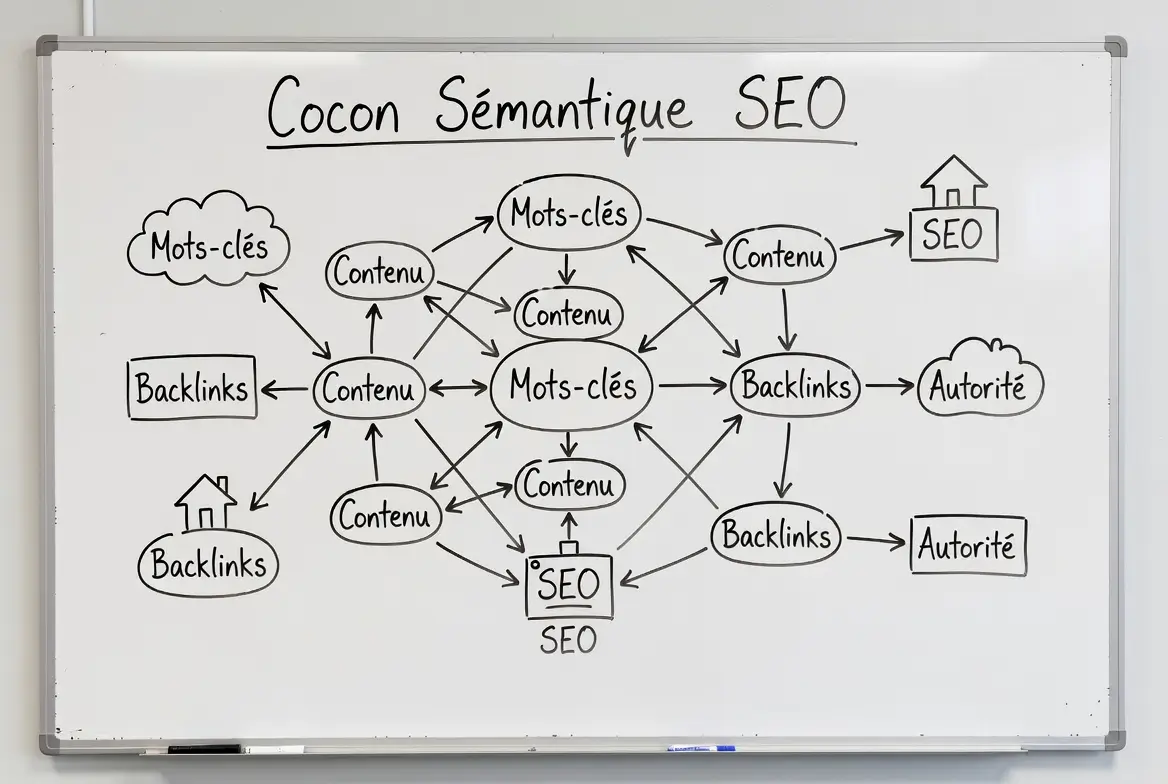
Internal networking: why Google rewards a clear organization
The internal networking is the backbone of a cocoon: it distributes relevance signals between pages, indicates priorities, and prevents similar content from being cannibalized. When the relationships are consistent, google understands the theme and hierarchy more quickly, which helps to better cover intentions.
It's not about adding links “for SEO.” The aim is to link pages because they are really complementary. Les engine algorithms Of research are looking for structured sets: contents that respond to each other, deepen and reinforce each other.
What makes a powerful internal mesh :
- Relier pages on the same subject according to a logic of progression
- Highlight main pages with more internal inbound links
- Limiter off-topic links, which blur the interpretation of the engines
- Guider the user to the most useful page for their needs
Cocoon vs silo: what are the differences between siloing and semantic cocoon in SEO
The silo organizes the content into waterproof blocks (strict categories), while the cocoon aims at controlled circulation between nearby pages. The Siloing is effective in keeping an architecture clean, but can become rigid if the contents have natural bridges. The cocoon, on the other hand, allows transversal links, provided that they remain coherent.
According to the French Laurent Bourrelly, the central idea is to build a logic ofresearch intentions and pathways, rather than a simple taxonomy. In the French SEO, Laurent Bourrelly popularized this approach by insisting on organization and continuity between contents.
Synthetic comparison:
- Silo : strict structure, very clear hierarchy, little transversality
- Cocoon : intention-oriented structure, contextualized links, guided path
- Siloing useful: when the themes are very separate
- Cocoon useful: when the subject requires gradual deepening
Keyword research: identify and target useful queries
An effective cocoon starts with a keyword research intention-oriented. You have to pinpoint the real needs behind the requests, then target one keyword main page per page, with variations that enrich the meaning without overloading. The objective is not to “place” words, but to build a response that is clearer than that of a contestant.
The decisive point is granularity. If a page tries to cover everything, it gets blurry. If each page targets a specific intention, the whole thing becomes readable for engines and more useful for the user. This is what helps improve the positioning of a site on realistic requests.
Simple steps to frame:
- Identify Internet users' requests by intention (information, comparison, action)
- Targeting a page with a strong intention, without merging everything
- Measure research volume and competitiveness before producing
- Prioritize The “close” subjects to build the depth of the cocoon
Architecture of a website: parent pages, daughter pages and internal links
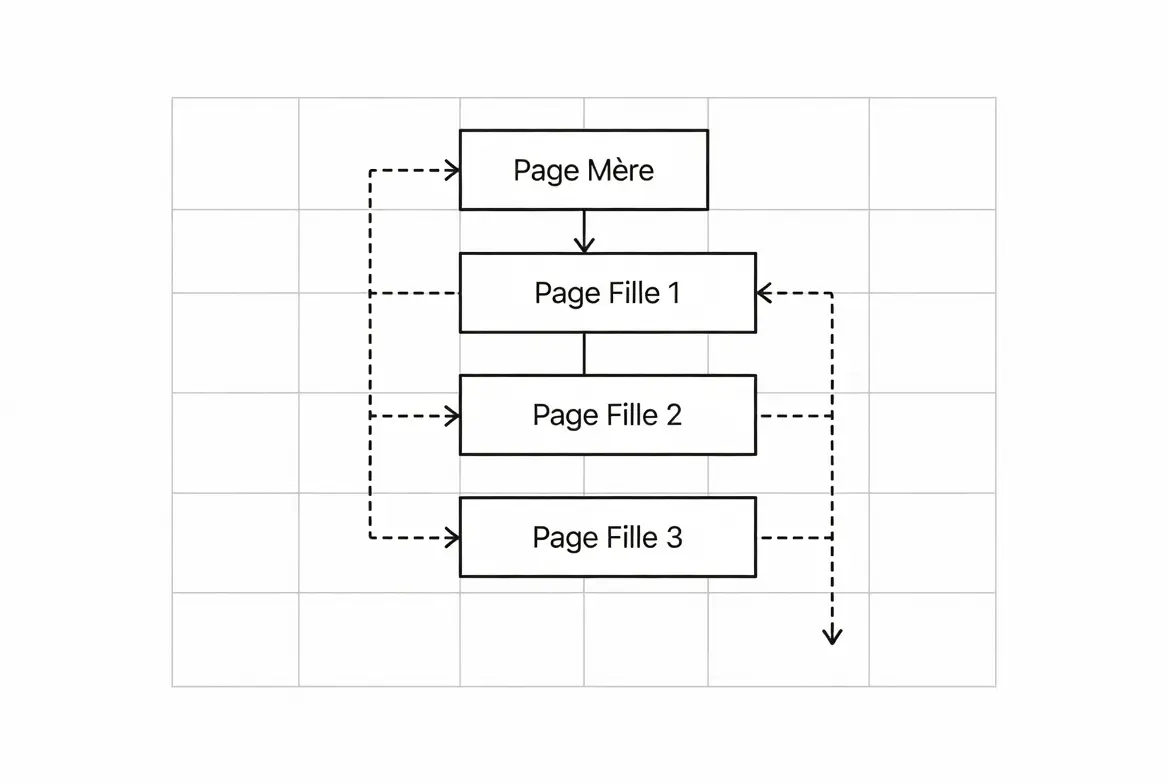
Success depends on a clear organization: a pillar page (mother page) that deals with the central subject, then secondary pages that delve into sub-topics. You create pages with distinct goals and then you make them linked together through contextualized links. This “cluster” structure facilitates understanding and reinforces overall coherence.
In concrete terms, each page must know where it is going and where it is coming from. This is where the cocoon becomes a system: between your pages, you distribute information and priority. You also avoid unnecessary multiple paths that scatter signals.
Good structuring practices:
- Define a pillar page and complementary daughter pages
- Relier The sister pages when they respond naturally
- Add A link To the page pillar from each secondary content
- Limiter accessing the same subject via too many different roads (Another page useless)
Editorial content: optimize each page without over-optimizing
A cocoon does not work if the contents are low. The quality content for each page is what turns architecture into results. You have to deal with the subject, provide evidence, respond quickly to the intention, and remain readable. In this context, Semantics is an SEO technique When it is used clarity and understanding, not mechanical repetition.
The right level ofoptimization is the one that helps the user. Each page should be relevante on an angle, with a simple structure, and a clear promise. If you stack the same paragraphs together, you create noise. If you really differentiate between pages, you're building depth.
Editorial references:
- Structuring The subject with a question, an answer, then an in-depth look
- Optimize the subparts with variants of The keywords without abusive repetition
- Strengthen credibility with examples and a “cause → effect” logic
- Preserve a single intent per page to avoid dilution
Tools to create and control the crawl of your cocoon
A cocoon is controlled with tools, because an unmeasured architecture often ends up drifting. Les tools to create and audit are used to verify the real structure: depth of clicks, isolated pages, too dense mesh, or pages that do not receive any internal signal. This tool is not an end, but a way to make quick decisions.
The challenge is also Crawl : if the robot spends its time on useless secondary pages, it explores your strategic pages less. You must therefore control the structure and limit the paths that multiply the URL with no value. This is especially true when a site has dense editorial content.
Useful controls:
- Map architecture and identify orphan pages
- Verify the depth of important pages (too deep access)
- Analyze The real internal paths and the pages that “suck” the links
- Follow the appearance of the contents in the Serp without confusing indexing and performance
External links: PageRank, backlinks and netlinking without confusion
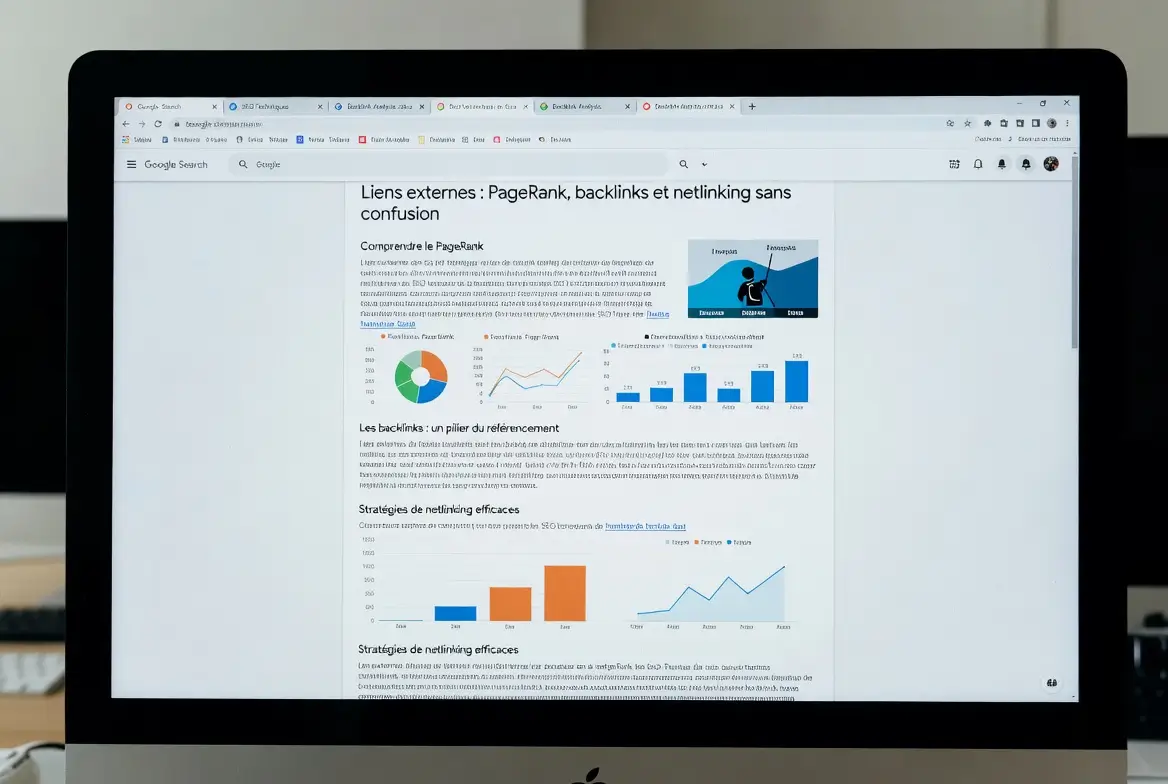
A semantic cocoon does not exclude Netlinking, it makes it more profitable. If the internal architecture is consistent, a link to a pillar page can then redistribute value to the secondary pages. That's where the PageRank (PageRank) makes sense: the internal structure transforms an external signal into global progress.
Les Backlinks must remain contextualized and credible. If you buy links without consistency, sometimes you gain quickly and then you lose stability. The healthiest approach is to create citable content and then to build authority gradually.
Best practices:
- Create content that deserves a quote, not just “optimized”
- Making connections from relevant pages, not artificial networks
- Diversifying sources and avoid repetitive patterns
- Relier The authority has strategic pages, not a generic page
Mistakes and limitations: when a cocoon is irrelevant
One Semantic cocoon is not not a one-size-fits-all answer. If you have limited content, or if your topics are very separate, a simple structure may suffice. The danger is over-architecting: multiplying pages “to create a cocoon”, with no real value. In this case, you dilute the meaning, you increase the cost of production, and you fragment the attention.
Another classic error: applying the same logic to all topics, even when intentions do not justify segmentation. A cocoon must respond to a reality: a volume of requests, a logic of journey, and a need for further investigation. Otherwise, you are building an empty structure.
Common mistakes to avoid:
- Create secondary pages with no editorial value or clear intent
- Multiply internal links without hierarchy, to the point of confusing the signal
- Ignore the algorithm and user signals (time, satisfaction, clarity)
- Confusing architecture and result: the structure is only useful if the content fits
Synqro method: creating semantic cocoons on Webflow and WordPress
At Synqro, we consider that a cocoon Semantic is an SEO strategy when it is based on clear governance: pages, templates, routes, priorities, and production. We often work on Webflow, but the logic also applies to wordpress. The difference comes from the execution: on Webflow, the consistency of components and templates facilitates control, provided you frame the structure from the start.
Our approach starts from the concrete: audit what already exists, choose the pillar pages, then build the daughter pages. Next, we align the mesh, content, and navigation signals. The aim is to stabilize the ranking in the results without multiplying unnecessary projects, and increasing the conversion rate by better guiding the routes.
What we are putting in place:
- Map The pages of your site and clarify their role
- Define an architecture that respects the content of a website and its priorities
- Structuring a measurable SEO semantic cocoon, without unnecessary debts
- Consolidate the natural referencing with a logic of journey and evidence
Conclusion: remember the essentials and apply without complicating
An effective semantic cocoon is based on organization, not on a trick. It is part of a natural referencing technique which aims to make a website more readable, more consistent, and more useful, both for the user and for the engines. The expected result is not a “pretty” diagram, it is an architecture that provides information valuable in terms of performance, by clarifying what works and what blocks.
If you need to remember a rule: build a simple structure, then go deeper only when the subject warrants it. This is what makes it possible to position a Engine site without creating editorial debt.
Actions to be applied as a priority:
- Identify The intentions and the main pages before writing
- Create daughter pages only if they provide real value
- Optimize internal networking to make the hierarchy obvious
- Measure impact and adjust, rather than piling pages
Semantic cocoon FAQ: frequently asked questions
What is a semantic cocoon and why does this approach work?
One semantic cocoon is a content organization that links pages dealing with the same subject, from the general to the specific. This method works because it aligns three elements: search intent, site structure, and internal link flow. The engines understand the topic better, and the user finds the expected answer more quickly, which reinforces the perceived quality.
How many pages does it take to create a credible semantic cocoon?
There is no magic number. A cocoon can start with a pillar page and a few useful sub-pages and then gradually expand. The right benchmark is intent coverage: if you have distinct and legitimate queries, you can segment. If you force the creation of pages to “fill”, you are creating weak content and an artificial mesh.
Does the semantic cocoon replace a backlink strategy?
No The cocoon works the internal structure, while backlinks work on external popularity. The two complement each other: a solid architecture makes it possible to better redistribute the value of an external link and to avoid it getting stuck on an isolated page. In practice, it is better to consolidate the structure and content before investing heavily in the acquisition of links.
Can we create a semantic cocoon on Webflow without development?
Yes, if the architecture is thought out correctly. Webflow makes it possible to structure CMS collections, to master the templates and to manage internal links with consistency. The key point is not code, but governance: avoid duplication, keep structures stable, and maintain a clear hierarchy. For a site with a large number of publications, rigor in terms of models is decisive.
How do I know if Google includes the pillar page as a reference?
You need to look at the signals: pages that are ranking, associated queries, pages that go up together, and the consistency of the snippets. If the pillar page is well understood, it captures general queries, while daughter pages capture more specific queries. In case of confusion, it is necessary to adjust the internal network, clarify the intent of each page, and rework the differentiation of content.
What are the most common mistakes when setting up a cocoon?
The main mistakes are the overproduction of weak pages, a too dense mesh without hierarchy, and pages that look too similar. We also see cocoons built with no clear intention, based solely on keywords. If pages don't meet distinct needs, you create internal competition and reduce overall readability, which slows progress.
Synqro's latest achievement