
{{text}}
Share
In an economic context where digital competition is intensifying, Local SEO is an essential lever for any company wishing to attract local customers. According to the latest studies, more than 46% of searches on Google have local intent, and 76% of users who search locally on their smartphone visit a business within 24 hours.
Faced with this reality, mastering the subtleties of local SEO is no longer an option, but a strategic necessity. Whether you are a merchant, a craftsman, a liberal profession or the manager of an SME, your ability to appear in geolocated search results directly determines your acquisition of new customers.
Synqro, Webflow agency specialized in digital strategy and SEO, has been supporting French companies for several years in optimizing their local visibility. With recognized expertise in local SEO, the Synqro team develops proven methodologies to sustainably position its customers in the first results of local searches. This article offers you an in-depth analysis of the mechanisms of local referencing and the concrete actions to be implemented to dominate your geographic market.
What is local SEO
The Local referencing, also referred to as local SEO (Local Search Engine Optimization), is the set of optimization techniques aimed at improving the visibility of a company in geographically targeted search results. Unlike traditional SEO, which aims for national or international positioning, local SEO focuses its efforts on a defined geographical area: city, neighborhood, region or kilometer perimeter around a point of sale.
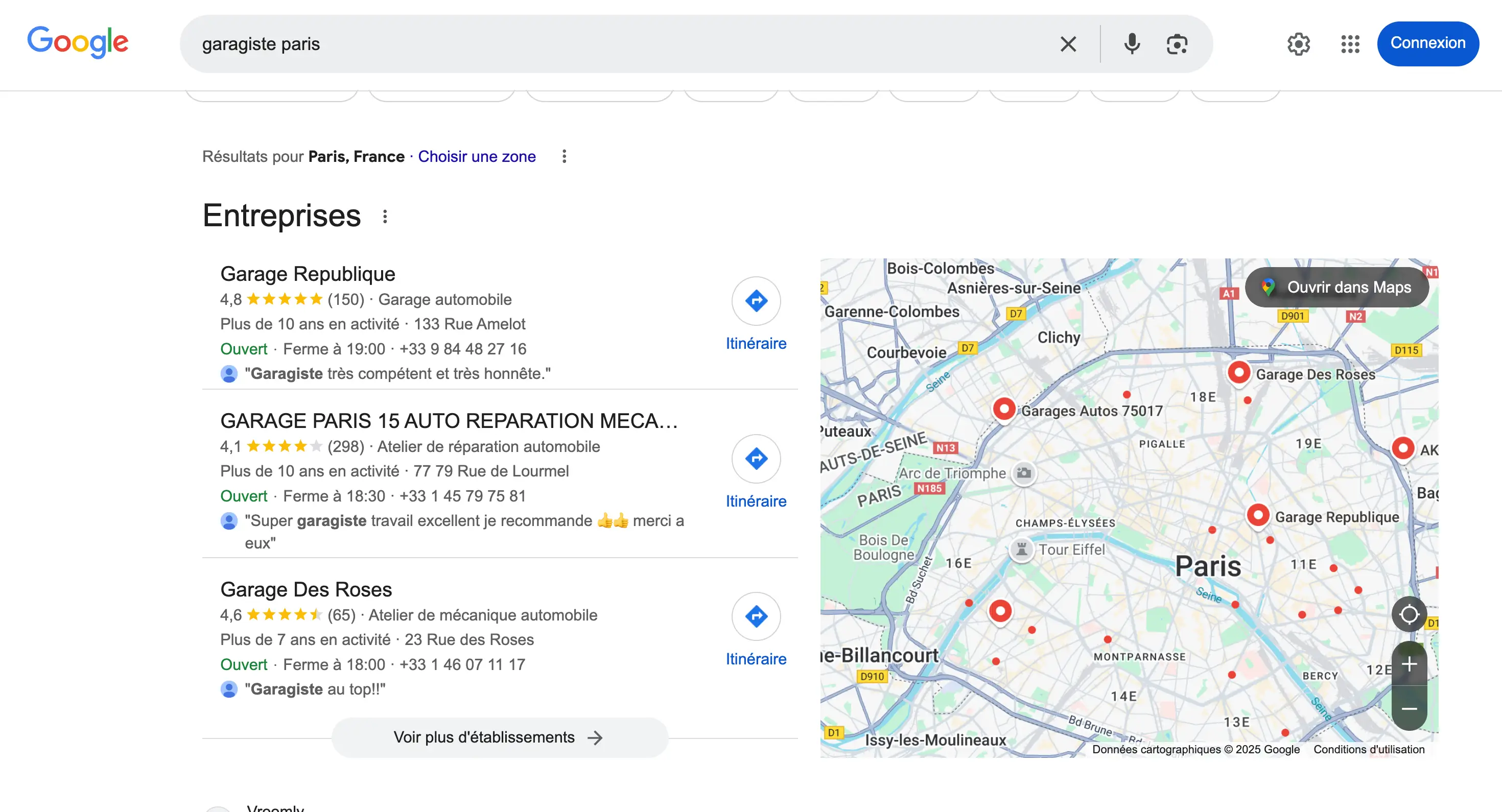
Fundamental distinction between classic SEO and local SEO
Traditional SEO is characterized by a national or international reach, with the main objective of generating qualified web traffic. Key factors are based on content, backlinks, and technical aspects. The results appear in the form of classic organic links, responding to informational or transactional user intent.
Local SEO, for its part, targets a specific geographic area (city, neighborhood, region). Its main objective is to generate store visits and phone calls. Key factors include the Google Business Listing, Customer Reviews, and Local Quotes. The results are displayed in the Local Pack and on Google Maps, responding to a navigational intent oriented to immediate action.
Local SEO responds to a major evolution in search behavior. Search engines, led by Google, have developed sophisticated algorithms capable of detecting the local intent of a query, even when the user does not explain their location. Thus, a search for “emergency plumber” will automatically trigger geolocated results based on the user's position.
This proximity dimension is in the process of transforming the SEO approach. The company is no longer just looking to generate traffic on its website, but to Trigger a Physical Action : store visit, phone call, itinerary request. The conversion rate of local searches significantly underlines that of generic searches, which explains the growing interest of professionals in this field.
Why is local SEO crucial for French businesses
The French market has specific characteristics that reinforce the importance of local referencing. With an economic fabric composed of 99.9% of VSEs and SMEs, France has millions of businesses whose activity is based on local customers.

Revealing statistics on the French market
Recent data confirms the extent of the phenomenon:
- 88% of French consumers Check online reviews before going to a local store
- 72% of local searches Result in a visit to an establishment located less than 8 kilometers away
- Businesses with a complete Google Business Profile receive 7x more clicks Only Those with Incomplete Information
- 28% of local searches Generate a purchase within 24 hours
Concrete impact on commercial performance
Local SEO directly influences three fundamental indicators:
Qualified visibility. Appearing in the Local Pack (the first three local results displayed under the Google map) guarantees maximum exposure to an intentional audience. These users are not browsing passively: they are actively looking for a product or service in the immediate vicinity.
Point of sale traffic. Unlike e-commerce, many activities depend on physical attendance. Local SEO establishes a direct bridge between online research and store visits, thus responding to the ROPO phenomenon (Research Online, Purchase Offline).
Customer acquisition cost. A well-executed local SEO strategy offers a greater return on investment than traditional advertising campaigns. Once the positioning is acquired, the flow of qualified prospects is maintained without marginal cost per contact.
Synqro's expertise in local SEO allows French companies to capitalize on these opportunities by deploying strategies adapted to the specificities of each local market.
How does local SEO work on Google
Understanding Google's algorithmic mechanisms is an essential tool for any effective local SEO strategy. The search engine uses specific systems to identify, qualify and classify local results.
The triggering of local research
Google identifies local intent based on several signals:
- Explicit queries : “Italian restaurant Lyon”, “dentist Paris 15"
- Implicit queries : “pizzeria open”, “urgent locksmith” (automatic geolocation)
- Geographic Modifiers : “near me”, “nearby”, “in my neighborhood”
When the algorithm detects local intent, it activates a ranking system distinct from traditional organic SEO, resulting in the display of Local Pack and Google Maps results.
Local results architecture
Local search results are structured in several areas. The Local Pack Is a block of three establishments displayed with interactive map, average score, address and opening hours. Google Maps offers extended results accessible via the dedicated tab or the application. Finally, Local Organic Results corresponds to web pages optimized for geolocated requests.
Positioning within the Local Pack is the priority objective of any local SEO strategy, as this area receives more than 44% of clicks on searches for local content.
Factors that influence local SEO
Google assesses local establishments according to three fundamental criteria, plus additional signals:
Relevance. Relevance measures the adequacy between the establishment sheet and the user's request. It depends on the main category and the secondary categories selected, the description of the activity and the attributes entered, as well as the keywords present in the customer reviews.
Proximity (Distance). The distance between the user and the establishment naturally influences the ranking. This factor, which is partly incompressible, highlights the importance of optimizing the other criteria to compensate for geographic remoteness.
Notoriety (Prominence). Notoriety includes the overall reputation of the company, assessed through the volume and quality of Google reviews, quotations in directories and third-party sites, backlinks to the establishment's website, as well as media presence and brand mentions.
Complementary signals. NAP consistency (name, address, phone) has a high impact and requires standardization across platforms. Localized content, from medium to high impact, involves the creation of dedicated pages by area. User engagement, which has a medium impact, involves replying to reviews and publishing regularly. Finally, behavioral signals, which have a variable impact, are improved by optimizing the click rate and interactions.
Optimizing your presence on Google Business Profile
Google Business Profile (formerly Google My Business) is the cornerstone of any local SEO strategy. This free interface allows businesses to manage their visibility on Google Search and Google Maps.
The optimization of this sheet directly conditions the performance in local referencing. A complete, updated and enriched sheet systematically surpasses overlooked profiles, regardless of the initial reputation of the establishment.
Components of a High-Performance Sheet
The Google Business Profile includes numerous fields, some of which are of major strategic importance:
- Institution name : Strictly in Accordance with Legal Identity
- Main category : decisive for positioning
- Address and service area : essential geographical precision
- Opening Hours : including exceptional hours
- Description : 750 characters to present the activity with keywords
- Attributes : specific characteristics (accessibility, payments accepted)
- Pictures and videos : Professional Visuals of the Establishment
- Publications : news, offers, events
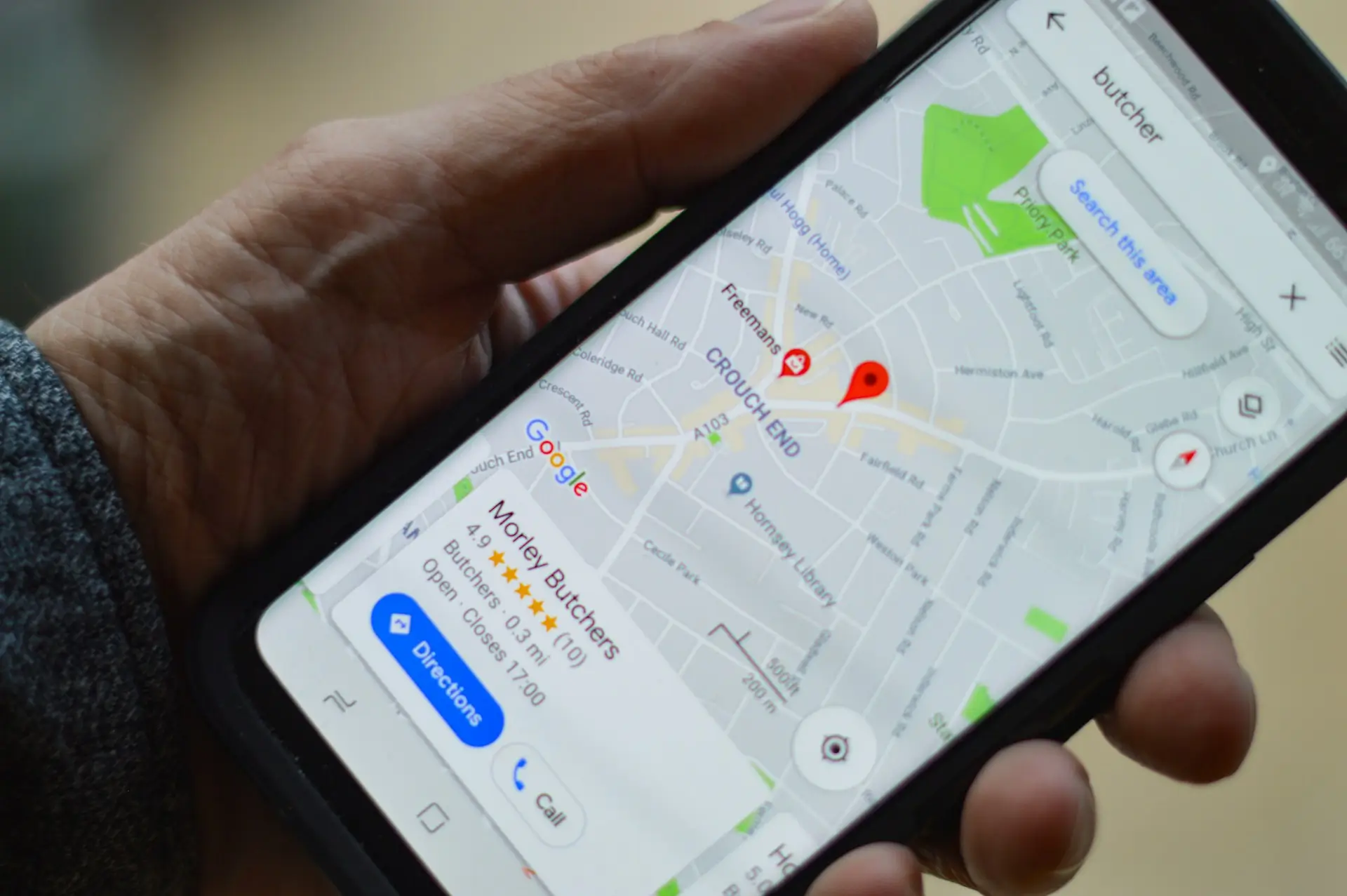
Create and configure your Google Business Form
Creating a Google Business Profile follows a structured process:
- Access Google Business Profile via business.google.com
- Search the institution to check for duplicates
- Create the form by entering the exact name of the company
- Select the main category accurately
- Specify the physical address or define a service area
- Fill in the contact details: telephone and website
- Verify: postal mail, telephone or email
- Complete all the information after validation
- Add visuals: logo, cover photo, interior and exterior photos
- Write the description by integrating strategic keywords
Synqro supports its customers in the creation and optimization of their Google Business Profiles, guaranteeing optimal configuration from the start.
Tips for optimizing customer reviews and photos
Feedback strategy
- Systematically solicit satisfied customers after each service
- Create a short link redirecting to the review form
- Integrate the review request into follow-up emails
- Train teams to encourage customer feedback
- Never Buy or Falsify Reviews (Penalized Practice)
Managing Existing Reviews
- Respond to each review, positive and negative
- Personalize Responses by Mentioning Specific Items
- Deal with Negative Reviews Professionally and Offer Solutions
- Report Fraudulent or Defamatory Reviews to Google
Optimizing visuals
- Choose high resolution photos (minimum 720 pixels)
- Photographing the exterior, the interior, the products and the team
- Regularly renew visual content
- Add geotags to image metadata
- Name files with descriptive keywords

Other levers to strengthen your local SEO
Beyond Google Business Profile, several complementary techniques contribute to consolidating local positioning.
Professional quotes and directories
Citations refer to mentions of the company on third party sites, including name, address, and telephone (NAP). The consistency of this information across the web reinforces credibility in the eyes of Google.
Priority directories for the French market: Yellow Pages, Yelp France, TripAdvisor (tourism/catering sector), Doctolib (medical professions), JuriTravail (legal professions), as well as the directories of CCI and chambers of trades.
Local netlinking
The acquisition of links (Netlinking) from geographically relevant sites amplified signals of local notoriety. This includes partnerships with complementary businesses, sponsoring local events, articles in the regional press and registering with local professional associations.
Localized content
The creation of pages dedicated to each intervention area makes it possible to target specific geographic requests. Each page must offer unique content, avoiding duplication penalized by Google.
Measuring and improving the performance of your local SEO
The continuous evaluation of the actions taken is a condition for the gradual improvement of results. Several tools and indicators make it possible to effectively manage a local SEO strategy.
Key Performance Indicators (KPIs)
Local Pack Prints, from Google Business Profile, measure visibility on local queries. Clicks to the site reflect the interest generated by the sheet. Itinerary Requests Reveal an intention to visit a physical person. Phone calls represent direct conversions. Positioning by Request, monitored via SEO tools like Semrush or Ahrefs, indicates the evolution of the ranking. The Volume of Reviews Reflects Perceived Notoriety, While The Average Grade express global reputation.
Recommended tracking tools
- Google Business Profile Insights : native data provided by Google
- Google Search Console : geolocated organic performances
- Google Analytics 4 : web traffic by geographic source
- BrightLocal : audit and specialized local SEO follow-up
- Whitespark : citation analysis and local ranking
Continuous improvement methodology
- Establish a dashboard consolidating all the KPIs
- Set Quantified Monthly Goals
- Analyze the differences between real performance and goals
- Identify priority corrective actions
- Implement optimizations iteratively
- Documenting Results to Capitalize on Learning
The Synqro team offers tailor-made support including monthly performance monitoring and continuous strategic adjustment, guaranteeing a constant improvement in results.
Conclusion: Take action to dominate your local market
Today, local SEO represents a decisive competitive advantage for French businesses. In an environment where consumers systematically use their smartphone to identify nearby businesses and services, the absence of a local SEO strategy is equivalent to commercial invisibility.
The fundamentals set out in this article form the basis of a structured approach: optimizing the Google Business Profile, proactive management of customer reviews, consistent quotations, creating localized content and rigorously monitoring performance. Each of these levers contributes to strengthening your positioning in geolocated search results.
However, the increasing complexity of algorithms and the intensification of local competition often require expert support. Synqro Puts its expertise in local SEO at the service of companies wishing to accelerate their development in their catchment area. From initial audit to continuous optimization, the agency deploys proven methodologies to transform your digital visibility into tangible business growth.
Don't let your competitors capture the customers who are looking for you. Contact Synqro to benefit from a personalized diagnosis and define together the local SEO strategy adapted to your goals.

FAQ: Common questions about local SEO
What is the difference between SEO and local SEO?
Local SEO focuses on optimizing for location-based searches, while traditional SEO aims to position a website on generic queries with no geographic dimension. Local SEO is essential for any business that has a physical location and is looking to attract local customers. This local SEO strategy integrates specific criteria such as the Google My Business listing, customer reviews and local quotes.
Unlike traditional SEO, which focuses on general web traffic, local SEO in order to generate qualified local traffic focuses on point of sale visits and phone calls. Google search results then show the local pack, this privileged area where the three most relevant establishments appear. The local nature of this approach means that Google is in a position to automatically detect the user's geographic intent, even without explicit mention of location. These two approaches are complementary and must be combined in a good global SEO strategy integrating digital marketing.
How long does it take to see local SEO results?
The first results of a local SEO strategy generally appear between 3 and 6 months after the deployment of optimizations. This delay varies according to several factors: the level of competition among local businesses in your sector, the initial state of your online presence, the sector of activity and the intensity of the actions taken to improve your SEO.
Optimizing your Google My Business Listing produces faster effects than local netlinking or creating content on the pages of your site. Working on the internal networking of your website also contributes to strengthening the visibility of your company in the medium term. A progressive and constant approach guarantees sustainable results to optimize your SEO, unlike aggressive techniques that may be penalized by Google and other search engines.
To accelerate results, focus on keeping critical information consistent: your business name, address, and phone number should be the same across platforms. These elements are taken into account by Google to assess the reliability of your establishment.
Is local SEO useful for businesses without commercial premises?
Local SEO is a strategy perfectly suited to service companies working at home or on customer sites. Google Business Profile makes it possible to define a service area without displaying a physical address, which is suitable for artisans, consultants and itinerant professionals. These professionals can thus strengthen their local presence and appear in the local results of the geographical areas where they operate.
Let's take a concrete example: a home hairdressing salon can definitely benefit from local SEO by defining the municipalities it serves. The optimization of the website with pages dedicated to each sector of intervention reinforces this visibility among potential customers searching on Google. Tools like Google Business Profile and Google Search Console make it possible to precisely monitor local performance for the various targeted areas.
Local SEO should therefore be considered by any structure wishing to attract customers in a defined geographical area, whether or not it has commercial premises.
How do I get more Google reviews for my business?
Obtaining Google reviews is based on a proactive and systematic approach, a central element in strengthening the visibility of your business in the local pack. Ask for each satisfied customer immediately after the service, when satisfaction is maximum. Create a short link redirecting directly to the review form and integrate it into your communications: email signature including your phone number, SMS follow-up, business card.
Train your teams to naturally encourage customer feedback and make the process easier by reducing the number of steps required. Respond to published reviews to demonstrate your commitment and encourage future contributions. This practice is taken into account by Google in evaluating the reputation of your establishment.
Reviews are a fundamental pillar to improve your local referencing. The more positive and authentic reviews you accumulate, the more credibility your Google My Business listing gains. This social dimension of local SEO directly contributes to strengthening your local presence in the face of competitors.
What are the common mistakes to avoid when it comes to local SEO?
The most common mistakes in local SEO include the inconsistency of information between different platforms. Your business name, address, and phone number should be exactly the same everywhere. The neglect of the Google My Business listing, the lack of response to customer reviews and the keyword stuffing in the name of the establishment are also penalizing practices.
The creation of false sheets to cover several areas and the purchase of fraudulent reviews lead to penalties that can go as far as the permanent deletion of the sheet. These practices seriously damage the visibility of your business in the long term. Google and other search engines are better and better at detecting these manipulation attempts.
Another common mistake: neglecting the internal network and the pages of your site dedicated to the various areas of intervention. A good SEO strategy integrates these technical elements to maximize local traffic. Finally, underestimating the importance of tools like Google Search Console to monitor local performance prevents identifying areas for improvement. An ethical and patient strategy produces lasting results and protects the reputation among local businesses in your sector.
Should you invest in Google Ads for local SEO?
Google Ads and local SEO are two distinct but complementary approaches in a global digital marketing strategy. Local SEO generates free organic local traffic once positioning is acquired, while Google Ads offers immediate visibility in return for pay per click in Google search results.
For local businesses that are new or want to accelerate their acquisition, a local Ads campaign can make up for the time needed for SEO. This approach makes it possible to attract customers quickly while the groundwork on the online presence is taking effect. The paid local pack appears above the organic results, offering maximum exposure.
In the medium term, investing in local SEO in order to build lasting visibility offers a better return on investment. The cost per acquisition is steadily decreasing as organic positioning is consolidated. For a company with a physical location, combining the two approaches makes it possible to strengthen short-term visibility while building a sustainable presence. Local SEO is therefore a strategic investment that continues to generate results long after its initial implementation.
How can local SEO help a local business like a hairdresser?
For a hairdressing salon or any local business, local SEO is essential to appear during searches carried out by the inhabitants of the neighborhood. When a user searches Google for the type “hairdresser near me”, the algorithm analyzes several signals to show the most relevant local pack. An optimized Google My Business Form, including quality photos, business hours and telephone number, is the first lever for action.
The local nature of this strategy means working on the consistency of information across all directories and platforms. The pages of your site should also reflect your geographic location with localized content that mentions the neighborhood, the city and the specificities of your customers. This approach makes it possible to strengthen your local presence and to be taken into account by Google as a reference establishment in your area.
Local natural referencing for local businesses is based on three pillars: a complete establishment sheet, positive customer reviews and an optimized website with a coherent internal network. By combining these elements in a good SEO strategy, you maximize your chances of attracting qualified customers and sustainably developing the visibility of your business.
Synqro's latest achievement